Tensions between Iran and the United States have intensified following recent military strikes and retaliatory threats. The conflict, which has now entered its twelfth day, has shaken global markets and raised concerns about wider regional instability.
The situation escalated after Iran’s Supreme Leader, Ali Khamenei, was reportedly killed during joint strikes carried out by the United States and Israel last week. Iranian forces responded quickly with missile and drone attacks, marking the beginning of a rapidly expanding confrontation.
Trump claims Iran’s military capacity has been weakened
Speaking in an interview with CBS News, Donald Trump expressed confidence that Iran’s military strength had been significantly reduced.
<blockquote> “I think the war is very complete, pretty much,” Trump said. “They have no navy, no communications, they’ve got no air force. Their missiles are down to a scatter. Their drones are being blown up all over the place.” </blockquote>
Trump also warned Iran about potential consequences if it continued to restrict access to the strategically critical Strait of Hormuz. The narrow waterway is one of the world’s most important passages for oil shipments, with exports from countries such as Iraq, Kuwait, and Saudi Arabia passing through it daily.
Iran had earlier declared the strait “closed” and warned that vessels attempting to pass through could be targeted.

Iran responds with a warning
Iranian officials responded sharply to the U.S. statements. Ali Ardashir Larijani issued a message condemning what he described as American threats.
<blockquote> “The Ashura nation of Iran is not afraid of your empty threats. Even those greater than you could not eliminate the Iranian nation. Be careful not to be eliminated.” </blockquote>
The message was released in Tehran by the Supreme National Security Council of Iran and referenced the recent death of Khamenei.
Iran signals loyalty to its new leader
Following the death of Ali Khamenei, Iranian state media indicated that his son, Mojtaba Khamenei, has taken over leadership.
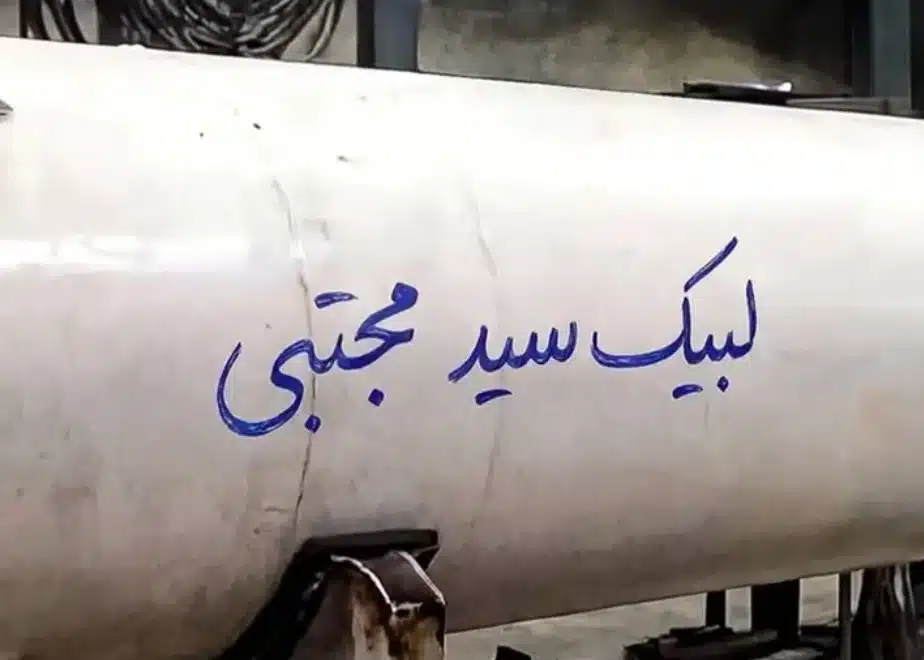
Iranian forces appeared to reaffirm their support for the new leadership by launching another wave of missiles and drones. Images broadcast on state television showed one missile bearing the inscription:
<blockquote> “At your service, Sayyid Mojtaba.” </blockquote>
The message was interpreted by observers as a signal of loyalty from Iran’s military forces to the new Supreme Leader.
Rising casualties and global concern
Reports cited by The Independent estimate that the conflict has already resulted in significant casualties.
According to those figures:
-
Approximately 1,245 Iranian civilians have been killed
-
Around 3,000 Iranian military personnel have died
-
Seven U.S. service members have reportedly lost their lives
Beyond the human toll, the conflict has also rattled global financial markets, particularly oil prices, due to fears about disruptions to shipping through the Strait of Hormuz.
Uncertain path ahead
Despite strong rhetoric from both sides, the long-term direction of the conflict remains unclear. While the U.S. administration has suggested Iran’s military capabilities have been severely weakened, Iranian leaders continue to signal resistance and a willingness to escalate if necessary.
With tensions still high and key shipping routes under threat, analysts warn that the situation could have far-reaching consequences not only for the Middle East but also for global economic stability.
As diplomatic and military pressures continue to mount, the international community is watching closely to see whether the conflict will de-escalate or expand further.