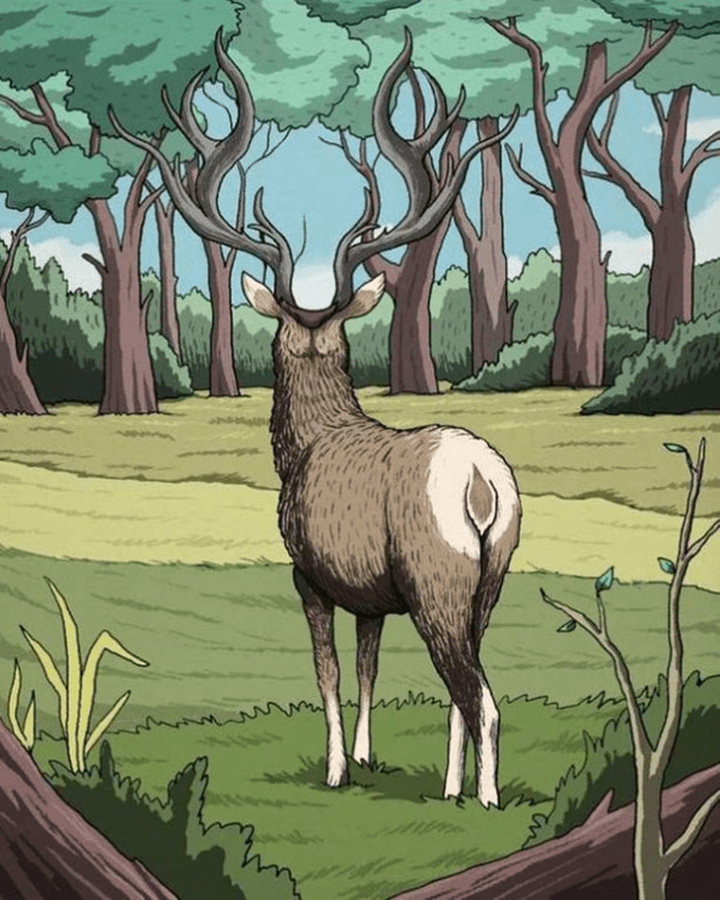
In a world brimming with visual stimuli, pausing to solve a puzzle is a delightful way to sharpen your focus and rejuvenate your mind. Today’s brain teaser is no ordinary challenge—it asks a simple yet mind-bending question: Can you spot the leopard in the picture?At first glance, this image seems straightforward—a peaceful woodland scene featuring a deer. But somewhere in this serene setting, a clever visual illusion hides a leopard. Are you up for the challenge? Let’s dive in and break it down step by step.
Why This Puzzle Is So Tricky
You might think spotting a leopard would be easy. However, this challenge isn’t about finding a creature crouched in plain sight. Instead, the leopard is hidden through an intricate illusion created by patterns and shapes in the image.
Common Mistakes People Make:
- Expecting the Obvious: Many assume the leopard will be physically drawn into the scene. When it isn’t, they get frustrated and miss the subtle clues.
- Focusing on the Deer: The central deer naturally grabs attention, making it easy to overlook the surrounding elements that form the leopard.
- Ignoring Patterns: This puzzle’s trick lies in how patterns and negative spaces create the hidden leopard. Without noticing these, you’re likely to miss it entirely.
Step-by-Step Guide to Finding the Hidden Leopard
If you’ve been struggling to find the leopard, don’t worry—you’re not alone! Follow these steps to uncover the elusive feline:
Step 1: Take a Step Back
Start by viewing the image as a whole. Don’t zero in on any specific detail just yet. Often, hidden images become clearer when you look at the bigger picture.
Step 2: Examine the Deer’s Antlers
Focus on the antlers. The hidden leopard is cleverly camouflaged here. The antlers form the outlines of the leopard’s face, including its eyes, nose, and mouth.
Step 3: Look for Facial Features
Pay close attention to the center of the antlers. Notice how the curves and spaces between them create the shape of the leopard’s eyes and mouth. This illusion plays tricks on your perception, so take your time.
Step 4: Notice the Background Trees
The surrounding trees play a crucial role in completing the leopard’s appearance. They form what looks like the leopard’s ears, seamlessly blending into the scene while adding depth to the illusion.
Step 5: Connect the Dots
Once you’ve identified the key features—eyes, nose, mouth, and ears—the full image of the leopard becomes clear. It’s fascinating how your brain finally pieces it together after noticing the individual elements.
The Leopard Unveiled
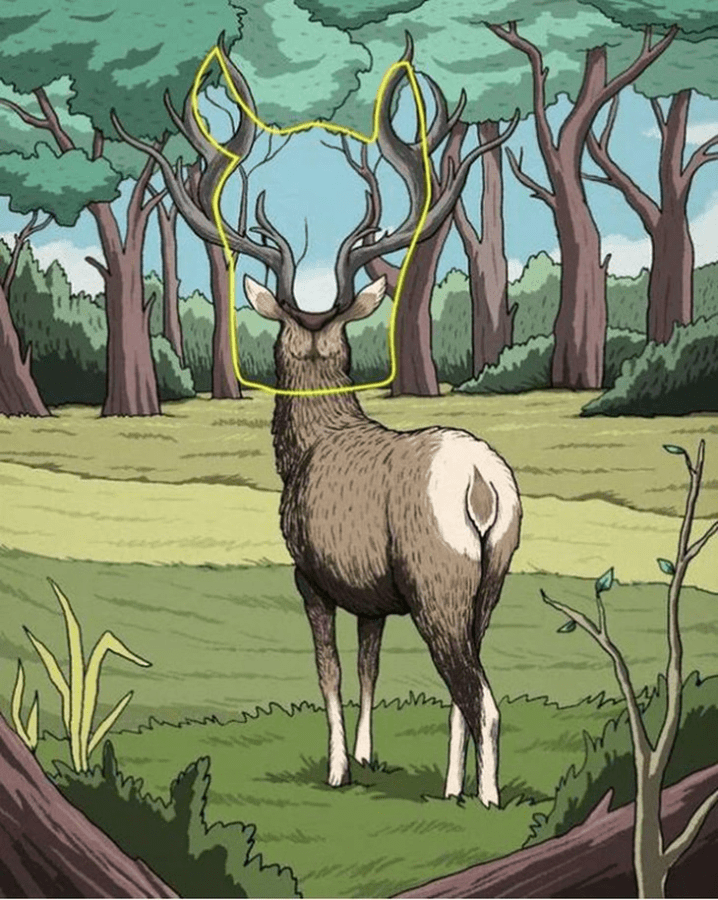
If you’ve followed the steps, congratulations! You’ve found the leopard. For those still struggling, here’s a breakdown:
- The antlers form the leopard’s face. The curves create the outline of its eyes and nose.
- The trees behind the deer act as ears. Their positioning completes the leopard’s appearance.
- The illusion combines negative space and clever alignment to trick your brain into overlooking the hidden animal.
This puzzle is a perfect example of how visual perception can be manipulated, making even obvious details seem invisible.
The Science Behind Visual Illusions
Why is spotting the leopard so challenging? It all boils down to how our brains process visual information.
- Pattern Recognition: Our brains are wired to focus on familiar shapes and patterns. In this puzzle, the deer stands out as the most prominent figure, making it harder to see the hidden leopard.
- Cognitive Bias: We tend to prioritize tangible objects over abstract patterns. This bias often prevents us from noticing illusions like the one in this image.
- Perceptual Shifts: Once you identify the hidden leopard, your brain reprocesses the image, making it nearly impossible to unsee.
Benefits of Solving Visual Puzzles
Puzzles like this aren’t just fun—they’re also incredibly beneficial for your brain.
1. Enhances Attention to Detail
Finding the leopard requires careful observation, training your mind to focus on subtle clues often overlooked in day-to-day life.
2. Boosts Problem-Solving Skills
This puzzle forces you to think outside the box and approach challenges from different perspectives, skills that are invaluable in real-life situations.
3. Reduces Stress
Taking a break to engage with a visual challenge can calm your mind, giving you a much-needed mental reset.
4. Improves Memory and Cognitive Agility
Analyzing visual details strengthens neural connections, helping you process information more efficiently.
Share Your Experience: Did You Find the Leopard?
So, how did you do? Did you spot the leopard right away, or did it take you a while to crack the puzzle? Whether you found it instantly or needed some guidance, puzzles like these are a great reminder of the joy of discovery.
Share your experience in the comments below! Did this puzzle stump you, or were you one of the lucky few who spotted the leopard immediately? Don’t forget to challenge your friends and family—they might approach it differently and surprise you with their answers.
Conclusion: The Joy of Hidden Puzzles
This brain teaser is more than just a fun distraction—it’s a reminder that sometimes, the answers are right in front of us, hidden in plain sight. By slowing down, shifting your perspective, and focusing on the details, you can uncover surprising solutions.
If you enjoyed this challenge, keep exploring! There’s a world of puzzles, optical illusions, and brain teasers out there waiting to stretch your mind and sharpen your focus. So, next time you’re faced with an image that seems simple, take a closer look—you never know what hidden gems you might find.