A major airline in the United States is tightening its rules around one increasingly common in-flight annoyance: passengers playing audio out loud on their phones or tablets.
The behavior, often referred to online as “barebeating,” describes travelers who watch videos, listen to music, or play games on their devices without using headphones, forcing nearby passengers to hear the sound.
For frequent flyers, the situation has become a familiar frustration. While it may seem minor compared to other disruptive behaviors, even a short burst of loud audio can disrupt the quiet atmosphere of a plane cabin during long flights.
Now, United Airlines has made it clear that the practice could lead to serious consequences.
A new rule in the airline’s policy
United recently updated its Refusal of Transport policy — the section of its contract of carriage that explains when the airline may deny boarding or remove a passenger from a flight.
Among the reasons now listed is a new category of disruptive conduct: passengers who play audio or video without using headphones.
Under the updated rule, travelers who refuse to comply may be removed from the aircraft or denied transportation entirely. The policy places the issue alongside other behaviors that can lead to removal, such as interfering with flight attendants, boarding while intoxicated, or causing disturbances in the cabin.
By including the rule in its official passenger agreement, the airline is giving crew members clearer authority to address the problem.
Why the airline clarified the rule
According to statements reported by NBC News, the expectation that passengers should use headphones has always existed. However, the airline decided to spell it out more explicitly.
The change also coincides with new in-flight internet technology. United is expanding high-speed Wi-Fi across its fleet through services such as Starlink, which will allow travelers to stream content more easily during flights.
As connectivity improves, airlines expect more passengers to watch videos, play games, or listen to music online. The updated rule aims to ensure that increased connectivity doesn’t translate into increased cabin noise.
In its statement, United emphasized that headphones are a basic expectation when consuming audio on board.
Passengers react online
Many travelers have welcomed the move, arguing that headphone use should already be standard etiquette in shared spaces.
On discussion forums like Reddit, commenters said they were surprised the rule needed to be formalized at all.
One user wrote that it was disappointing that airlines had to “police common courtesy,” while another argued that playing audio out loud in a crowded cabin shows a lack of respect for fellow passengers.
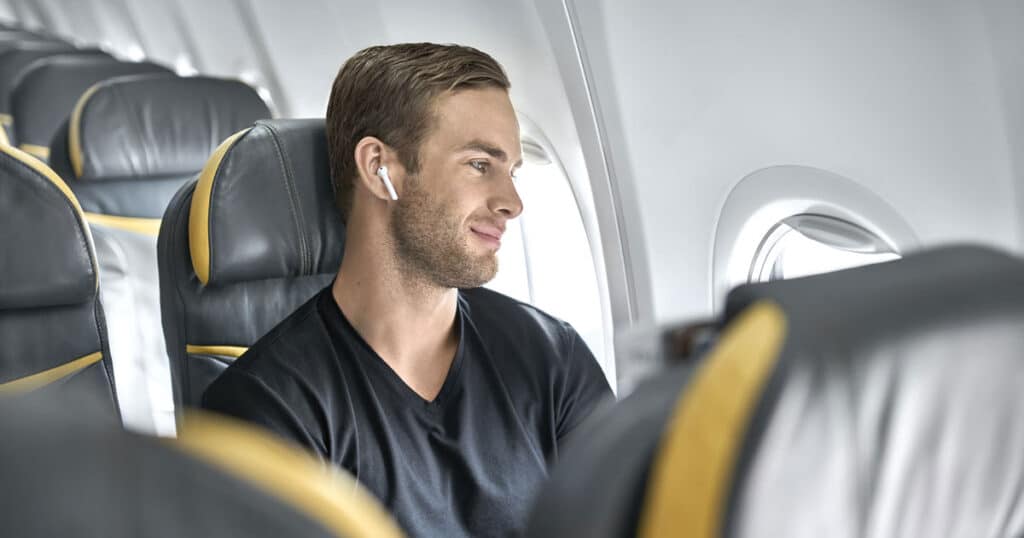
Some travelers even said the issue had become frequent enough to influence which airlines they choose.
A challenge for flight attendants
Flight attendants say the problem is more common than many people realize.
According to airline employees who have shared their experiences online, crew members often have to remind passengers during nearly every flight to lower their device volume or use headphones.
For flight crews, enforcing these small rules can become an added challenge on top of their primary responsibilities, which include safety procedures, customer service, and managing other in-flight issues.
By adding the rule directly to the contract of carriage, the airline aims to make enforcement clearer and reduce confrontations between passengers and crew.
The issue with children and devices
Another common source of complaints involves children watching videos on phones or tablets without headphones.
Some parents argue that very young children cannot comfortably wear headphones, while other travelers insist that parents should prepare for flights by bringing appropriate equipment or limiting device volume.
Airline staff say the policy applies to all passengers and all devices, regardless of age.
A reminder of basic travel etiquette
Air travel places hundreds of people in a confined space for hours at a time, making courtesy especially important. While many disruptive behaviors — from seat kicking to loud conversations — can’t easily be regulated, playing media out loud is one issue airlines can address through policy.
United’s updated rule reflects a broader effort by airlines to maintain a calmer cabin environment as technology changes the way passengers spend their time in the air.
For many travelers, the message is simple: if you plan to watch videos, listen to music, or play games during a flight, bring headphones — or risk facing consequences.