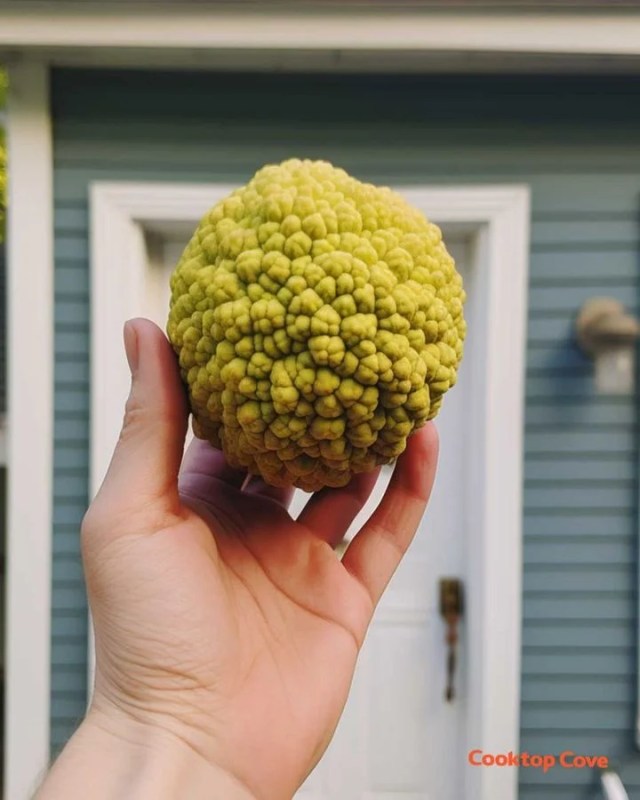
Hedge apples, also called Osage oranges, are unique fruits from North America. They are about the size of softballs and have bumpy, bright green skins.
Even though people don’t usually eat them, hedge apples are known for their special qualities and many practical uses. This article will look at what hedge apples are like and how they can be used.
The Unique Features of Hedge Apples
Size and Look: Hedge apples are about the size of a softball. Their bright green, bumpy surface makes them easy to recognize.
Not Edible: Even though they look appealing, people don’t usually eat hedge apples because they taste bitter and have a tough texture. However, they are useful in other ways.
Where are Hedge Apples Found?
Hedge apples are mostly found in the central United States, where the Maclura pomifera tree grows naturally. They are common in states like Oklahoma, Texas, Kansas, Missouri, Arkansas, Louisiana, Nebraska, Iowa, and Illinois. You can often find them in woodlands, prairies, and along riverbanks in these areas. They can also be found in other parts of the U.S. and other countries because they are used for landscaping and windbreaks, but they are most common in the central U.S.
Versatile Uses of Hedge Apples
Natural Pest Repellent:
Hedge apples are often used as a natural way to repel pests. People place them in basements, garages, and other areas where insects are a problem. It’s believed that the chemicals in hedge apples, like 1,4-dichlorobenzene, help keep spiders, ants, and other pests away. However, there’s not much scientific evidence to prove this, so their effectiveness can vary.
Decorative Purposes:
Hedge apples are popular for decorations, especially in the fall. Their unique look makes them great for centerpieces, wreaths, and other seasonal décor. People often use them in creative projects to add a natural and unusual touch.
Folk Medicine and Traditional Remedies:
In some traditional practices, parts of the Maclura pomifera tree, like the leaves, bark, and roots, have been used to treat different health issues. These remedies are believed to have anti-inflammatory and antiseptic properties. However, there’s no scientific proof to support these claims, and the safety and effectiveness of these remedies are uncertain.
Crafting and DIY Projects:
Wildlife Attraction:
Hedge apples can attract wildlife. Animals like squirrels and deer might eat them when other food is hard to find. If you enjoy watching wildlife, putting hedge apples in your yard can help you see these animals up close.