Can I Eat Oranges That Have Black Stuff Inside?

The Moldy Orange Mystery

The Unsettling Discovery

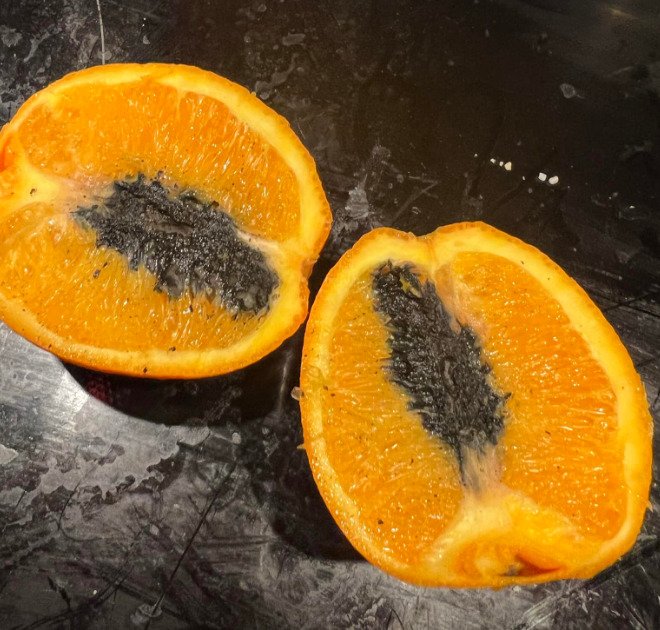
Have you ever sliced into a juicy orange, only to find an unexpected black spot inside? Recently, a curious homeowner shared a photo of such an orange in a home tips Facebook group, sparking a lively discussion. The orange had a peculiar black spot and mysterious stuff inside, leaving the homeowner puzzled.

The Fungus Revelation

Closer inspection revealed that the dark substance inside the orange was a type of fungus or mold. This discovery raised an important question: Is it safe to eat an orange with black inside?

The Safety Verdict

The short answer is no. While it might be tempting to salvage the unaffected parts, caution is crucial when dealing with mold due to potential health risks.

The Challenge of Identifying Mold

Identifying mold by sight alone is challenging. Different types of mold appear in various colors, textures, and patterns, making accurate diagnosis difficult for the untrained eye. In this case, the black stain on the orange clearly indicated fungal growth.

Mold and Its Environment

Mold thrives in damp, humid conditions, and fruits like oranges provide an ideal environment. Spores can penetrate the fruit’s skin and proliferate inside, creating a breeding ground for potential health hazards. Some molds produce mycotoxins that pose serious health risks when ingested.

The Safe Approach

To err on the side of caution, discard any fruit showing signs of mold. Consuming mold-contaminated food can lead to health issues. Mold spreads quickly, and even if visible signs are limited to one section, the entire fruit might be contaminated.

Impact on Taste and Quality

Mold affects the taste and quality of fruit. A moldy orange won’t provide the refreshing flavor and nutritional benefits associated with citrus fruit. Mold alters the texture, aroma, and overall palatability, diminishing the eating experience.

Prevention Tips

To avoid moldy surprises, practice proper storage and handling. Store fruits in a cool, dry place, and promptly refrigerate leftovers. Regularly inspect fruits for signs of spoilage and discard any that appear suspect.

The Facebook Group Consensus

The Facebook group discussion highlighted the importance of caution with moldy food. Although the community couldn’t inspect the homeowner’s orange physically, their collective wisdom emphasized the universal rule: when in doubt, throw it out. Your health and taste buds will thank you for making the safe choice.

Related Posts

After My Husband Forced His Sick Father Out, I Cared For Him Alone While Working Two Jobs

The Watch The argument started over something small. A window. My father-in-law was sitting in the armchair by the radiator, the blanket slipped from his knees, and…

I Made My Prom Dress From My Dad’s Shirts to Honor Him — What Happened Next Surprised Everyone

The Dress I Made From My Father’s Work Shirts My father and I were always a team. My mother passed away when I was born, so it…

I Arrived at the Hospital to Bring My Wife and Newborn Twins Home — But Only the Babies Were There, Along with a Note

The Day I Went to Bring My Wife and Twins Home—And Found Only a Note The morning I drove to the hospital to bring my wife and…

Russia warns it will bring about the ‘end of the world’ if Trump…See more

Renewed geopolitical tensions in the Arctic have drawn global attention after recent remarks by Donald Trump about the strategic importance of Greenland. The comments revived debate over the island’s role…

After 28 Years of Marriage, I Discovered My Husband Owned Another House – So I Drove There and Was Left Speechless

At 55, I believed my life was settled. Not perfect, but solid. Predictable in a way that felt earned. I had been married for nearly three decades,…

Sad news for drivers over 70, they will soon no longer be able to…

Questions about whether older adults should continue driving safely have become part of a wider conversation about mobility, independence, and road safety. While age alone does not…