When nature calls, we all want to answer it as quickly and discreetly as possible, especially in public restrooms. But did you know that squatting over the toilet might not be as healthy as you think? Let’s take a closer look at why this seemingly harmless habit can actually be problematic over time.

1. A Higher Risk for Urinary Tract Infections
Did you know that your pelvic floor muscles are about 40% tensed when you squat over the toilet? This means that your bladder is not fully relaxed. As a result, when you stand up, there may be some urine left inside. This leftover urine can create a breeding ground for bacteria, increasing your risk of urinary tract infections.
2. The Sensation of Always Needing to Pee
Have you ever experienced the uncomfortable sensation of always needing to pee? Squatting over the toilet can contribute to this. When you sneeze, jump, laugh, or cough, the urine left inside your bladder can accidentally leak. Not only is this embarrassing, but it can also give you a constant feeling of needing to empty your bladder.
3. Weakening of the Bladder Over Time

Repeatedly squatting over the toilet can train your pelvic muscles to not relax fully, leading to a weaker bladder over time. This can make it harder for your bladder to contract and empty properly.
4. The Benefits of a Full Squat
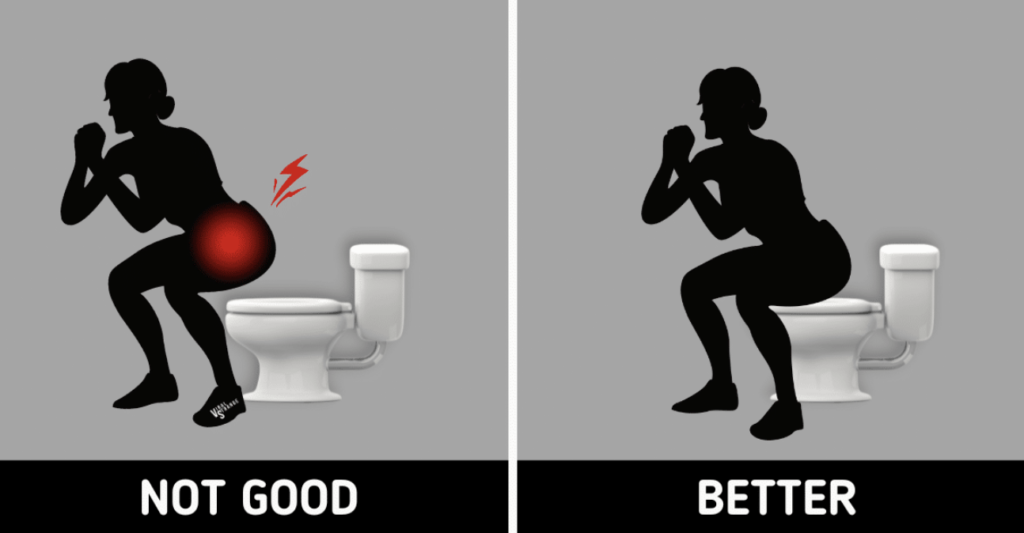
Instead of squatting over the toilet halfway, consider doing a full squat. This position, where you sit lower on the toilet, allows for a deeper relaxation of the pelvic and bladder muscles. By fully squatting, you may actually be promoting better bladder health.
So, the next time you find yourself in a public restroom, think twice before squatting over the toilet. Consider the potential risks and try doing a full squat instead. Your bladder will thank you!
Tell us in the comments: Do you squat when you pee in public restrooms? What other precautions do you take?