Understanding Good Mold
Molds that are introduced to ripen or add flavor to cheese are considered safe to eat. These beneficial molds include:
- Penicillium roqueforti: Found in French Roquefort, English Stilton, and Danish blue cheeses, this blue/green mold adds a distinctive flavor.
- Penicillium camemberti: The white, fluffy mold rind on brie and Camembert comes from this mold.
- Penicillium glaucum: This greenish mold is common in Italian Gorgonzola.
- Mucor Rind: Known as “wild rinds,” these molds appear in browns and grays on cheeses like Tomme de Savoie and St. Nectaire.
Recognizing Bad Mold
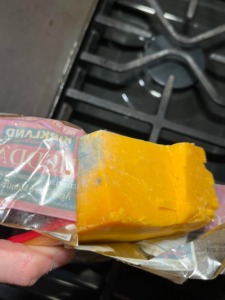
However, not all molds are beneficial. Sometimes, your cheddar develops green or white fuzz, and cottage cheese turns an alarming shade of orange. To determine which moldy cheese is safe to eat, consider the cheese style.
Soft and Fresh Cheeses
High-moisture cheeses like cottage cheese, cream cheese, and fresh mozzarella usually contain few preservatives. When these cheeses develop mold, the mycelium can penetrate deeper into the center, making them potentially harmful. Discard them.
Hard Cheeses
What about moldy cheddar? This question arises often. I advise that hard cheeses like California dry jack, Parmesan, or aged Gouda are nearly indestructible. In harder cheeses, the mold’s mycelium doesn’t penetrate deeply, so they’re generally safe.
Dealing with Mold on Cheese
If mold appears on a hard cheese, you can scrape, wipe, or brush it off the surface.
What Happens if You Eat Moldy Cheese?
Cheese with bad mold may taste bitter or “off,” but it’s not deadly.
When to Exercise Caution
Sometimes, mold develops inside the cheese. English-style clothbound cheddar often has fissures with blue mold. Small amounts are fine, but if there’s too much, cut it off and discard it.
Moreover, cheese isn’t always homogeneous. If a cheese looks different, ask your cheesemonger for guidance. They should confirm its quality and ripeness. Some producers now include appearance and condition information on labels, which helps.