Nestled in the heart of Lower Manhattan, there is a peculiar 29-story skyscraper that stands out among the bustling city buildings. This unique structure, known as 33 Thomas Street, has intrigued New Yorkers for years due to its distinctive appearance – it is completely devoid of windows. Despite its lack of windows and enigmatic presence, this building holds a fascinating history that intertwines telecommunications and modern surveillance.
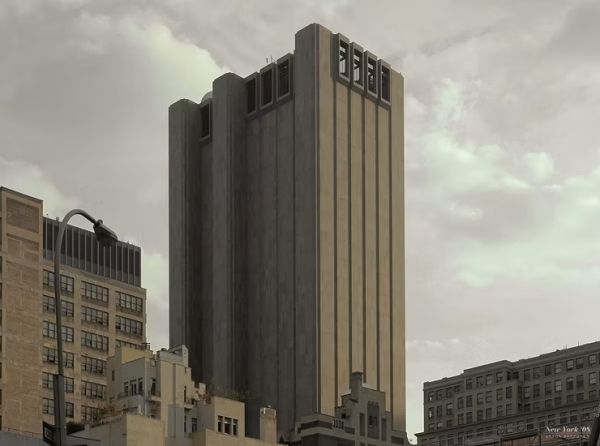
Constructed in 1974, 33 Thomas Street was originally designed to be a fortified communication nerve center, capable of withstanding even atomic blasts. The architectural firm John Carl Warnecke & Associates took on the challenging task and created a 550-foot tower made of concrete and granite. Unlike its neighboring residential and office buildings, this skyscraper does not have a single window and remains unilluminated. By day, its daunting presence casts a giant shadow, while at night, it takes on an eerie aura with a faint hum emanating from its square vents.
With its mysterious and imposing stature, 33 Thomas Street has earned the nickname “Long Lines Building” and captured the imagination of locals as one of the city’s most iconic skyscrapers. However, the true purpose behind this enigma remained hidden until recently.
Beyond its unconventional facade lies a deeper secret. Through leaked documents obtained by NSA whistleblower Edward Snowden, architectural plans, and interviews with former AT&T employees, evidence emerged suggesting that 33 Thomas Street served as an NSA surveillance site codenamed Titanpointe.
Inside the building, there resides a significant international gateway switch responsible for routing phone calls between the United States and countries worldwide. The NSA is believed to have tapped into these calls from a secure facility within the AT&T building. This covert surveillance program targeted not only international organizations such as the United Nations, the International Monetary Fund, and the World Bank, but it also extended to numerous countries, even including U.S. allies.
While AT&T’s collaboration with the NSA on surveillance is no secret, the specific role of facilities like 33 Thomas Street in housing top-secret programs remained shrouded in secrecy. However, the Snowden documents shed light on the integration of NSA equipment into AT&T’s network, revealing the methods and technology employed by the agency to access communications data from the company’s systems.
The NSA’s presence within this iconic skyscraper raises fundamental questions about the boundaries of surveillance in our modern world. As Elizabeth Goitein, co-director of the Liberty and National Security Program at the Brennan Center for Justice, points out, “This is yet more proof that our communications service providers have become, whether willingly or unwillingly, an arm of the surveillance state.” The deep integration of the NSA within domestic communications infrastructure challenges the notion that such surveillance can be neatly confined to non-American targets.
AT&T’s close relationship with the NSA has been extensively documented. However, it remains unclear whether the NSA utilized AT&T’s space or equipment at 33 Thomas Street for their surveillance activities. This ambiguity raises important questions about the extent of government surveillance within the building.
The NSA’s involvement in surveillance within 33 Thomas Street not only raises legal and ethical concerns but also serves as a testament to the delicate balance between privacy and security in our interconnected world. It highlights the challenges of ensuring adequate oversight in an era of advanced technology and government surveillance.
In conclusion, 33 Thomas Street stands as an iconic and enigmatic skyscraper in New York City. Within its concrete walls, it holds the history of telecommunications and the mysteries of modern surveillance. Although the full extent of its involvement in government spying may forever remain concealed, it serves as a symbol of the complex interplay between privacy and security in our ever-connected world.