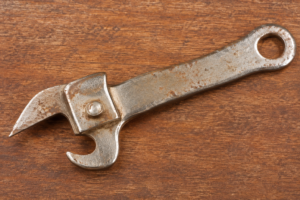
There was a time when almost every American kitchen had one tucked away in a drawer. It was small, made of simple metal, and easy to overlook among the spoons, knives, and other everyday utensils. Yet when someone needed to open a bottle or a sealed can, this little tool was often the first thing they reached for. Known as the church key, it was a familiar part of everyday life long before modern kitchen gadgets became common.
Its design was wonderfully simple. One end featured a pointed tip for puncturing cans, while the other could lift bottle caps with a little pressure. Some people even used it to make two openings in a can, allowing liquid to pour more easily. It required no electricity, batteries, or complicated instructions. It simply worked. But as modern can openers and convenient kitchen tools took over, the church key slowly disappeared from many household drawers. What remained, however, was something far more meaningful than its original purpose. For those who grew up seeing one in their family kitchen, finding one today can bring back memories they never expected to feel again…CONTINUE READING
For many people, discovering an old church key is like opening a small door to the past. It might remind them of a parent standing at the kitchen counter, preparing dinner after a long day. Perhaps they remember the familiar sound of utensils moving inside a drawer, the smell of a home-cooked meal, or watching someone effortlessly open a bottle with the same little metal tool. These memories may seem ordinary, but they often become some of the most treasured moments of childhood. Collectors also appreciate church keys for their practical design and place in everyday American history. Different shapes, finishes, and manufacturers tell a story about how household tools evolved over generations.
Today, the church key may no longer be an essential item in most kitchens, but its charm has never completely disappeared. Some people keep one because it still works, while others hold onto it because it belonged to someone they loved. Its value isn’t measured by its price or appearance. It’s found in the memories attached to something so ordinary. Sometimes, the smallest objects carry the biggest pieces of our past. And sometimes, all it takes is finding an old kitchen tool in a forgotten drawer to remember a home, a family, and a time when life felt a little simpler.